

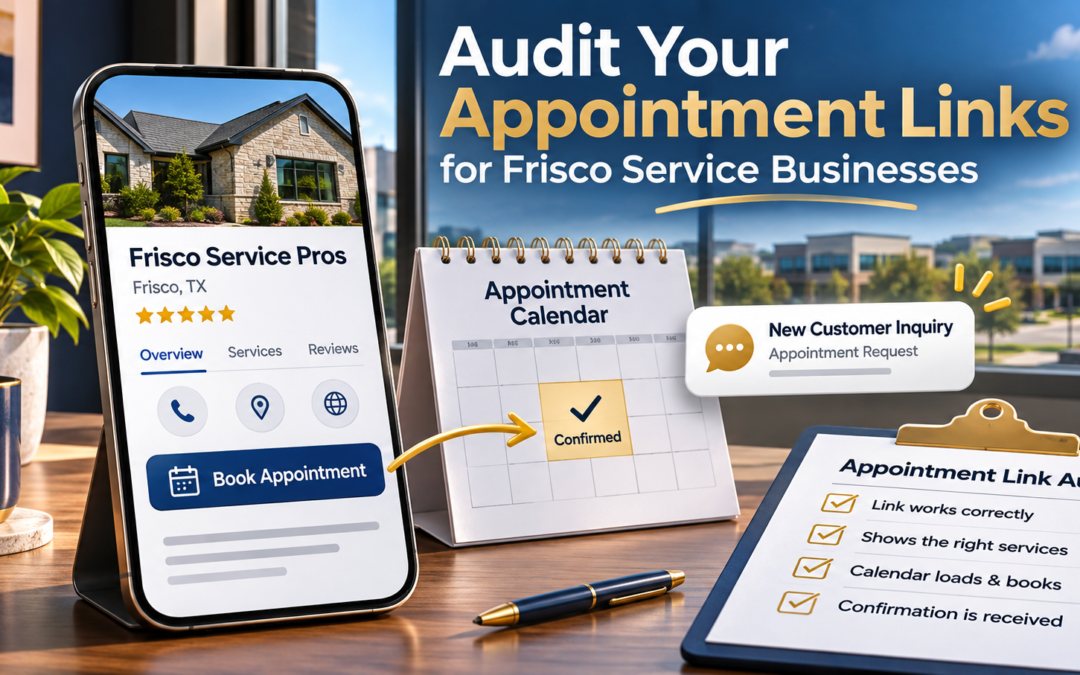
Google Business Profile Appointment Links: A Lead Audit for Frisco Service Businesses
Frisco service businesses: use this 25-minute audit to check Google Business Profile appointment links, mobile booking paths, notifications, and confirmed leads.

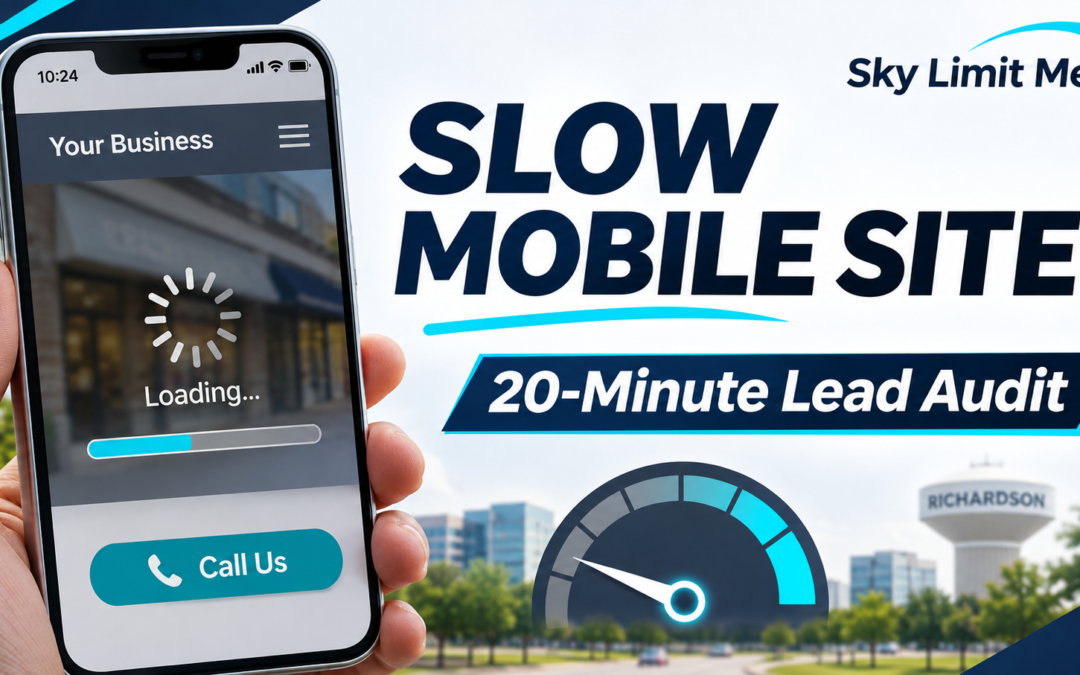
Slow Mobile Website, Lost Local Leads? A 20-Minute Speed Audit for Richardson Businesses
A 20-minute mobile website speed and lead audit for Richardson businesses: Core Web Vitals, contact paths, and practical fixes.

How Wylie Businesses Can Compete With Larger Plano Companies in Local Search
A practical guide for Wylie business owners competing with larger Plano companies in local search—Google Business Profile, service pages, trust, and qualified leads.
First 90 Days of Local SEO: What Plano Business Owners Should Expect
What should happen in the first 90 days of local SEO? A useful campaign starts by fixing measurement and technical barriers, then improves the pages and business information customers actually use. By day 90, you should have a documented baseline, completed priority fixes, stronger local content, and a clear report on calls and qualified inquiries. You should not expect a guaranteed Google Maps position or a fixed number of leads.
Key Takeaways
- Use the first 30 days to establish a baseline, repair critical issues, and verify lead tracking.
- Use days 31–60 to improve core service pages and publish useful local information for the areas you genuinely serve.
- Use days 61–90 to validate lead quality, conversions, and completed work; rankings and lead volume are not guaranteed.
For a business owner in Plano, Allen, Frisco, or the wider Dallas–Fort Worth area, the challenge is deciding what deserves attention first. This roadmap explains what to ask an SEO provider, which tasks can be verified, and how to judge progress without confusing activity with business results.
Before Day 1: Agree on the business outcome
Start with the customer action you want: booked appointments, estimate requests, phone calls, or qualified form submissions. “More traffic” is not specific enough. A dental practice might track appointment requests, while a remodeling contractor may value completed consultation forms with a project ZIP code and budget range.
Choose two or three primary services and the communities you can genuinely serve. A Plano-based contractor may work in Allen, Richardson, and Frisco, but that does not justify creating dozens of thin, interchangeable city pages. A local SEO plan should reflect actual service coverage, customer demand, and the content your business can support.
Next, record who owns the website, domain, Google Business Profile, analytics accounts, and call-tracking numbers. You should retain administrative access to your business assets. If an agency manages them, document permissions and the handoff process before any changes begin.
Days 1–30: Audit, measure, and remove blockers
Week 1: Capture a baseline that you can compare later
Connect or review Google Search Console and Google Analytics 4. In Search Console, inspect indexed pages, search queries, clicks, impressions, and technical indexing issues. In Analytics, confirm that important actions are measured. Google recommends generate_lead for lead submissions and related events for later lead stages. A button click alone is not the same as a completed sale.
Record a starting snapshot: branded and nonbranded search performance, organic landing pages, Google Business Profile interactions, phone inquiries, form submissions, and the number of inquiries your team considers qualified. Keep the reporting period consistent. Small businesses often have limited data, so compare trends carefully instead of treating every weekly change as meaningful.
For phone calls, decide whether you need a dedicated tracking system. If you use call tracking, preserve a consistent public business number and configure tracking carefully so it does not create conflicting contact details. Make sure your privacy disclosures reflect the tools you actually use.
Week 2: Check technical SEO and the mobile contact path
Test the pages that matter most: home, core services, key locations, and contact. Look for pages blocked from indexing, broken internal links, duplicate titles, redirect loops, slow mobile experiences, and contact forms that fail to submit. Prioritize anything that prevents a ready-to-buy visitor from reaching you.
Open your site on a phone and complete a real test inquiry. Can someone find the phone number in seconds? Does the tap-to-call button work? Does the form acknowledge submission? Is the response routed to the correct person? These are conversion checks, not just technical SEO tasks. If the contact path is difficult to use, our 20-minute Google Maps lead audit explains how to look for common gaps.
When a deeper crawl or implementation is needed, review our technical SEO services for Plano businesses. An audit should end with a prioritized list of fixes and evidence that each completed fix works.
Weeks 3–4: Audit your Google Business Profile
Check that the business name, category, address or service area, hours, phone, website, and services are accurate. Choose categories based on what the business actually does; do not add keywords to the business name unless they are genuinely part of its real-world name. Service-area businesses should follow Google’s address-display rules.
Google says local results depend mainly on relevance, distance, and prominence. You can improve the accuracy and usefulness of your information, but you cannot purchase or promise a particular organic Maps ranking. Reviews should come from genuine customer experiences; never offer incentives that violate platform policies. For more context on those factors, see our guide to local SEO for Dallas businesses.
Day-30 deliverable: a baseline report, an ordered issue list, fixed critical errors, verified lead tracking, and a Google Business Profile accuracy checklist. Ask for before-and-after evidence, not a spreadsheet full of unchecked tasks.
Not sure which issues should come first? We’ll review your website, Google visibility, and contact path, then explain the highest-priority next step.
Days 31–60: Improve relevance and the pages that generate inquiries
Weeks 5–6: Build service-page clarity
Focus first on pages for the services customers are most likely to purchase. Each page should answer: What problem do you solve? Who is the service for? Where do you provide it? What is included? What should the customer do next? Include real examples, clear service boundaries, and specific details that a generic AI-written page cannot provide.
For example, a Plano kitchen remodeling page might explain the consultation process, typical project stages, common homeowner questions, and the areas served. It should not claim “guaranteed lowest prices” or invent a completed local project. A dental office may need a different approach, with accurate treatment information and appropriate professional review.
Link related service pages naturally so visitors can move from a broad explanation to the specific solution they need. Avoid stuffing every paragraph with city names. A clear page that answers a buyer’s question is more useful than repeating “Plano SEO” or “Dallas contractor” dozens of times.
Weeks 7–8: Publish genuinely useful local information
Choose topics based on sales conversations, support questions, Search Console queries, and gaps in existing pages. Useful examples include “What happens during a roof inspection?” or “What should a patient bring to a first appointment?” The exact subject depends on the business and what customers ask before contacting it.
Include an answer near the beginning, practical details, and a relevant next step. Cite authoritative sources for rules, medical information, or technical claims. Add an original photo, a real example, or a transparent process description when available. Do not publish multiple near-identical pages just to target adjacent ZIP codes.
For visibility in AI-powered Google Search features, the fundamentals still matter: accessible pages, useful original information, relevant internal links, and accurate business details. Google says there is no special AI-search markup or required “AI file” that guarantees inclusion. Avoid paying for unsupported shortcuts.
Day-60 deliverable: improved priority service pages, a small set of genuinely useful supporting resources, a documented internal-link plan, and a second measurement snapshot. Changes should be logged so you can tell what happened and when.
Days 61–90: Validate the work and decide what to do next
Weeks 9–10: Check discoverability and conversion quality
Inspect whether updated pages are indexable and discoverable through navigation and internal links. Review the actual queries bringing visitors to the site. Compare organic landing-page engagement and inquiry volume with the baseline, allowing for seasonality, small sample sizes, and changes in advertising or demand.
Do not judge success by rankings alone. A page can move up for a low-intent term without producing a customer. Conversely, a modest number of high-intent visits can be valuable if they lead to consultations. Track qualified inquiries separately from spam, wrong-number calls, and irrelevant form submissions.
Weeks 11–12: Run a conversion review
Listen to the business process, not only the website metrics. Are calls answered during posted hours? Do form inquiries receive a timely response? Is the service area clear? Are visitors landing on a page that matches their original question? If tracking shows visits but few qualified leads, review the offer and contact experience before buying more traffic.
Ask the agency to walk through a real example: the original customer question, the page that answered it, the action taken, and whether the inquiry was qualified. Protect customer privacy when sharing examples. This review can reveal opportunities in copy, page layout, follow-up, or service descriptions.
Day 90: Request a decision-ready report
A strong report separates completed work from outcomes. It should show the baseline, changes made, verification evidence, current organic performance, lead quality, remaining risks, and the next three priorities. Include the owner and expected effort for each priority. If a metric cannot be measured reliably, say so instead of inventing an improvement percentage.
Google notes that the effect of SEO improvements may take days or several months, and no change guarantees a ranking increase. Ninety days is a useful operating checkpoint, not a universal deadline for reaching page one. A new site, a competitive service category, and an established local brand may progress at very different speeds.
A practical 90-day local SEO checklist
| Period | What should be done | What you should receive |
|---|---|---|
| Days 1–30 | Baseline, technical and mobile audit, tracking, Business Profile review | Prioritized fixes and verified measurement |
| Days 31–60 | Service-page improvements, useful local content, internal links | Published improvements and change log |
| Days 61–90 | Indexing checks, inquiry review, lead-quality analysis, next-quarter planning | Outcome report and ranked next actions |
Five questions to ask before hiring a local SEO agency
- What exactly will you deliver in the first 30 days? Look for named audits, fixes, and evidence.
- Who owns the website and Google Business Profile? Your business should retain access.
- How will we distinguish qualified leads from clicks? Ask for a measurement plan that reflects your sales process.
- How will you avoid duplicate or thin location pages? Expect a strategy based on real services and useful information.
- What happens if the data does not improve? Look for diagnosis and reprioritization, not a ranking guarantee.
Frequently asked questions
Can local SEO work in 30 days?
Some technical and contact-path fixes can be completed and tested within 30 days. Search visibility and qualified-lead changes may take longer. The first month should establish a reliable baseline and remove the most important blockers.
Should I invest in Google Ads while SEO develops?
It depends on demand, budget, and whether your website can convert visitors. Ads may generate faster visibility, but they introduce media costs and require separate tracking. Decide based on expected lead value and available resources rather than assuming every business needs both.
Do I need a separate page for every city near Plano?
No. Create a location page only when it provides genuinely distinct, useful information about an area you actually serve. Avoid near-duplicate pages that merely replace the city name.
Will adding AI-related schema make my business appear in AI answers?
No. Google says there are no special AI-specific optimizations or schema requirements for appearing in AI Overviews or AI Mode. Keep the page crawlable, useful, and accurate, and follow Google’s standard Search guidance. No one can guarantee inclusion in an AI-generated answer.
What should I measure at the end of 90 days?
Review qualified calls and forms, organic search landing pages, indexing health, customer-relevant queries, and the actual fixes completed. Use consistent periods and explain any major changes in seasonality or other marketing activity.
Make the next 90 days accountable
If you have been paying for SEO without knowing what was fixed or whether the work creates inquiries, ask for a clearer plan. At Sky Limit Media, we help Plano and Dallas–Fort Worth businesses connect search visibility with a usable website and a measurable contact path.
Book a free consultation to review your website’s priorities and discuss a practical next step. No ranking or lead volume can be guaranteed, but the work, measurements, and decisions should always be understandable.
Sources and further reading
- Google Business Profile: Improve your local ranking
- Google Search Central: SEO Starter Guide and timing expectations
- Google Analytics: Recommended lead-generation events
- Google Search Central: AI features and your website